

All posts by admin

4 Questions 4: Thomas Kim

Thomas is AEB’s Applications/Sales Engineer serving Central Ohio. In this role he works with current and new customers to help them to select the best systems needed for their projects.  He will work with engineers, contractors, and owners from the quoting process to start-ups to commissioning and provide the upmost care in customer service.

Hi Thomas. Can you tell us a little about yourself?

I reside in Columbus, Ohio with my wife and two children. I graduated from DeVry Institute of Technology in 1998 with a B.S. in Electronics Engineering Technology.  Throughout my career, I’ve had the privilege of working with different organizations in different industries including Manufacturing, Distribution, Transportation, and in the Energy sector doing design and controls work for power plants.  I’ve also lead teams in different Sales Manager positions, coaching and leading various sales representatives to help them grow and be successful.

What do you like most about your job?

What I like most about my job is going out and meeting new people and building that rapport with them so that they can count on me for their project needs.  I enjoy working with my colleagues in a true team fashion to come up with the best way to help our customers with their needs.

What is it about AEB that made you want to come to work for the company?

What attracted me to come work for AEB was working for a smaller, privately owned company, where I can help them grow and be successful.  I wanted to be part of this team after meeting with Joe, the President of AEB, and work with him to help him grow his company.

OK, enough about work. What do you enjoy doing away from the office?

When I’m not working, you can find me playing golf or coaching my kids in various sports activities on the weekends.

I enjoy spending time with my family and going on vacations all over the country.  Having time with family and friends is crucial in having a balanced work life so that I can be successful both in work and personal life.


The Hazards of Chlorine Gas Leaks

Chlorine gas, a pale yellow-green substance with a pungent odor, has been widely used since its discovery in 1774. It plays a crucial role in various industries, such as water purification, manufacturing, and chemical production. Despite its utility, chlorine gas poses significant dangers when leaked, affecting human health, the environment, and industrial processes.

Health Risks

Acute Exposure

Acute exposure to chlorine gas can lead to severe health issues. When inhaled, chlorine reacts with moisture in the respiratory tract to form hydrochloric acid and hypochlorous acid, both of which can damage tissue. This can result in symptoms ranging from mild irritation to severe respiratory distress, depending on the concentration and duration of exposure.

  • Low Concentrations (1-3 ppm): At these levels, chlorine can cause irritation of the eyes, nose, and throat. Symptoms may include tearing, coughing, and a burning sensation in the throat.
  • Moderate Concentrations (5-15 ppm): Exposure to moderate concentrations can result in difficulty breathing, chest tightness, and pulmonary edema, which is the accumulation of fluid in the lungs. This can be life-threatening if not promptly treated.
  • High Concentrations (>30 ppm): High levels of chlorine exposure can lead to acute lung injury, suffocation, and death. Victims may experience symptoms such as severe coughing, wheezing, and shortness of breath.

Chronic Exposure

Chronic exposure to lower levels of chlorine gas can lead to long-term health effects. Repeated exposure, even at low concentrations, can cause persistent respiratory problems, such as chronic bronchitis, asthma, and other pulmonary conditions. Long-term exposure is also linked to eye and skin irritation, with the potential for lasting damage to these tissues.

Environmental Impact

Chlorine gas leaks pose substantial risks to the environment. When released into the atmosphere, chlorine gas can react with water vapor to form hydrochloric acid, contributing to acid rain. Acid rain can harm aquatic ecosystems, soil, vegetation, and infrastructure, leading to widespread ecological damage.

Additionally, chlorine can react with organic compounds in the environment, producing toxic byproducts like dioxins and chlorinated hydrocarbons. These compounds can persist in the environment and bioaccumulate in the food chain, posing a long-term threat to wildlife and human health.

Industrial Hazards

In industrial settings, chlorine gas leaks can disrupt operations and pose hazards to workers. Chlorine is often stored and used in large quantities under pressure, and leaks can occur due to equipment failure, improper handling, or accidents. In chemical manufacturing and water treatment plants, for instance, chlorine leaks can lead to fires or explosions if the gas comes into contact with flammable materials.

The presence of chlorine gas can also necessitate evacuation and decontamination procedures, halting production and leading to significant economic losses. Furthermore, the cleanup of chlorine leaks requires specialized equipment and trained personnel, adding to the complexity and cost of managing such incidents.

Preventive Measures

Preventing chlorine gas leaks requires a comprehensive approach that includes proper storage, handling, and maintenance protocols. Key preventive measures include:

  • Regular Inspection and Maintenance: Ensuring that storage tanks, pipelines, and valves are regularly inspected and maintained can help identify and rectify potential leak sources before they become critical.
  • Training and Safety Protocols: Workers handling chlorine should be well-trained in safety procedures and emergency response. Personal protective equipment (PPE) should be readily available and used appropriately.
  • Leak Detection Systems: Installing advanced leak detection systems can provide early warnings of chlorine releases, allowing for swift response to mitigate risks.

Emergency Response

In the event of a chlorine gas leak, prompt and effective emergency response is crucial to minimize harm. Evacuation of affected areas, provision of medical treatment to exposed individuals, and containment of the leak are essential steps. Emergency responders should use appropriate PPE and follow established protocols for dealing with hazardous gas releases.

Conclusion

Chlorine gas, while valuable in many applications, poses significant dangers when leaked. The health risks to humans, environmental impact, and industrial hazards associated with chlorine gas leaks underscore the need for stringent safety measures and effective emergency response strategies. By understanding and addressing these risks, we can better protect public health, the environment, and industrial integrity from the dangers of chlorine gas leaks.

AEB and Critical Environment Technologies can help you monitor for chlorine gas leaks.  Contact us to learn more.

Mercy Hospital

While ventilation is important in all commercial and residential buildings, it is especially critical for healthcare facilities. Reliably consistent airflow and related air pressure helps to maintain a clean and healthy environment. And good ventilation improves air quality and helps to prevent the spread of airborne allergens and related illnesses.

As the second largest health system in Ohio and the state’s fourth-largest employer, Mercy Health operates more than 250 healthcare organizations throughout Ohio and Kentucky. General Contractor, Peck, Hanniford & Briggs was hired to oversee construction of Mercy Health’s 60-bed, state-of-the-art hospital and new medical office building in the Mason, Ohio area. The facility will offer a comprehensive range of high-quality healthcare services for residents throughout several surrounding communities.

Duct Work Challenges

Straight runs of ductwork allow for the flow profile to fully develop where it can be measured accurately. However, rooftop HVAC units are often designed with little or no straight run duct work which creates challenges for many airflow measurement systems. In this case the building’s air handling unit design included no straight runs. Consequently, an alternative air measurement solution was needed.

Originally, a thermal-based air flow solution was being considered. However, this would require the fabrication of a 3’+ long spool piece and rain hood that would be attached to each of the seven (7) air handling units. The addition would be required to protect the airflow from the elements and to provide the straight runs that are required by the manufacturer for performance.

Additionally thermal flow measurement technologies do not perform as designed when they are exposed to elements such as rain, snow, or condensing moisture.  Installing them in this manner in an outside AHU is asking for potential measurement issues.  All said and done, this solution could not only affect performance and add unnecessary costs but would also negatively impact the building’s aesthetics.

The AEB Solution

With a reputation for delivering results, AEB was contacted to see if another solution was available. Because a thermal solution had already been proposed and was less than ideal, the company recommended Air Monitor Corporation’s static pressure OAM II Outdoor Airflow Measurement System. Standard equipment costs and installation for the OAM II are similar to that of a thermal probe array.

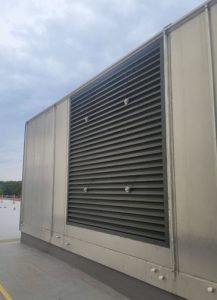
Designed for outdoor applications, the innovative system is remarkably resistant to effects of moisture, dust, debris, shifting wind loads and gusts while providing airflow measurement accuracy to within ±5% of rate, with AMCA certified ZERO straight run requirements. For this application the system consisted of the OAM II Transmitter with stainless steel uni-sensors that could be directly installed into the louver in the air handling units.  This solution provided excellent airflow measurement, reduced cost, and installation time as well as minimal impact on building aesthetics.

From measurement and quoting to installation, balancing, testing and sign-off, AEB worked with Peck, Hanniford & Briggs, Johnson Controls, and Heapy Engineering every step of the way.

Results

With a product specifically designed for OA applications, the client is reaping all the benefits of this more durable and lower maintenance solution. While more reliable airflow readings and better building aesthetics are noteworthy, the biggest advantage was in money saved during installation.

Based upon the additional required materials and labor for an installation with thermal probes, estimated cost savings are from $5000 to $7500 for each application.  This includes a 36” spool piece for each of these large opening sizes (9’ x 9’) which provided some straight run (although still not meeting manufacturers guidelines), a rain hood or other equipment/materials to protect equipment from the environment and improve aesthetics, as well as mechanical installation and painting of these components. With a total of 6 applications the estimated installation savings range from $30,000 – $45,000.

Contributing to a Sustainable Planet

Few things in this world are as important as the planet itself.  And at AEB we’re proud to do our part. This past year, with the help of our customers, AEB planted 379 trees through the organization OneTreePlanted.  We’re proud of our commitment to sustainability and look forward to continuing efforts like this in the years ahead.
About OneTreePlanted

OneTreePlanted is a non-profit organization focused on global reforestation.  Their global projects help to restore forests after fires and floods, create jobs, build communities, and protect habitat for wildlife.

Since 2014 they have planted over 92.7 million trees in more than 80 countries across the globe. And in 2022, they more than doubled the impact from 2021 – with 52.7 million trees!

How to Help

Please consider donating to this worthy cause. We hope that you will join us in the coming year to make an even bigger impact.

Go here to make a donation to keep our planet green, sustainable, and healthy!

Continuous Monitoring of Carbon Dioxide and Oxygen in Fermentation Rooms

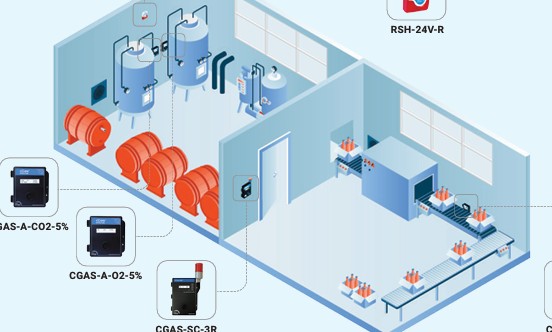
Areas of concern for high levels of Carbon dioxide (CO2) in wineries include pits, sumps, storage tanks and bottling rooms, but in particular, fermentation rooms. During fermentation a significant amount of CO2 is generated. If the tanks are indoors, the CO2 that escapes can collect in low lying areas and pose a safety hazard to employees. CO2 is twice as heavy as air and will sink to the bottom of a room or a tank, forming potentially hazardous pools of gas that buildup and displace Oxygen (O2). Being odorless and colorless, the presence of CO2 is not known until symptoms of exposure are experienced, unless gas detection equipment is used.

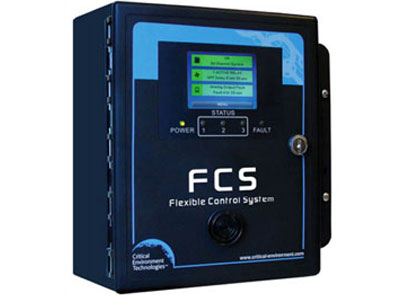
Using Critical Environment Technologies’ FCS Flexible Control System with a CGAS Detector CO2 Transmitter, and a CGAS Detector O2 transmitter along with a personal, portable O2 detector is the solution. The placement of the transmitter inside the fermentation room provides continuous monitoring for potential leaks of Carbon dioxide. The FCS Controller with a top mounted strobe mounted outside the room door provides a status of the air quality conditions inside the room prior to entry. If a CO2 leak is detected the top mounted strobe will activate and an audible alarm will sound. The designated relays will activate a pre-set response, such as turning on a remote alarm device, actuating the mechanical ventilation system and/or triggering another set response as required.

Read the entire paper here.

1 on 1 with: Ron Sweet

Ronald Sweet is the Eastern Regional Sales Manager, North America, for Critical Environment Technologies Canada Inc. (CET).  As well as managing the day-to-day sales activities of a Distributor / Dealer network, he is involved with providing applications engineering support and system specifications for consulting engineers, in the fields of gas detection for life safety systems and indoor air quality control applications.

Read this interview to learn a little more about Ron, his experiences, and what we can look forward to from CET in the months ahead.

Gas Detection Made Easy

As The Gas Detection Experts, Critical Environment Technologies (CET) want to make your life easier when it comes to figuring out what gas detection system you need for your project. Each project is different, even if it’s the same type of application.

Parking garages for example differ in size, placement of columns, walls and other obstacles, and entrances, exits and ventilation equipment vary in type and location. These variables impact how many sensors are required, where they need to be installed, whether zoning is required and the possible need for additional hardware like relays, analog outputs, power supplies, etc.

Want to learn more? Click here to read CET’s three step approach to gas detection made easy!

May 2023

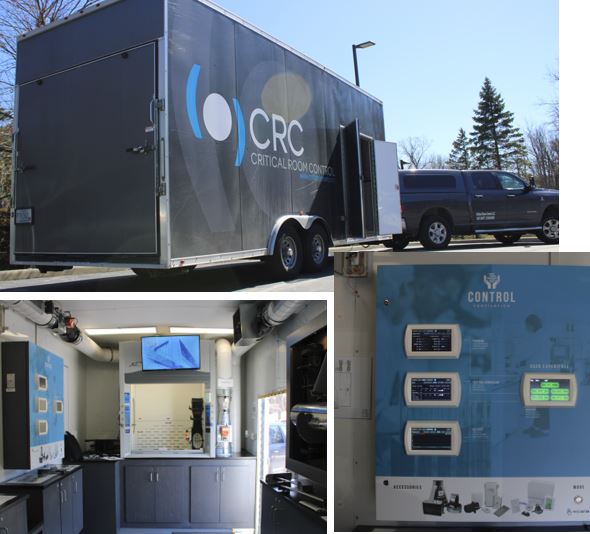
In this issue we introduce the CRC Mobile Lab provide tips for designing your gas detection system, and put the spotlight on our partner TAMCO.

Gas Detection Systems: Your Design

Critical Environment Technologies (CET) knows a thing or two about gas detection systems – and so does AEB. In this YouTube video, you’ll learn about what you need to think about so that we can help design and implement the most effective gas detection system.

CET Application Engineer, Fikret Edip discusses a three-step approach to designing an effective gas detection system for your project. Knowing your application and identifying the target gas to be measured will allow us to help you find the right CET product. But we don’t stop there. AEB engineers and professionals will work with you to make sure that the proper monitor is selected, installed, and tested.

Read our case studies to learn how AEB and CET are ensuring parking garage safety at TQL Stadium and the Dayton Public Library.

Contact us here to learn more.